



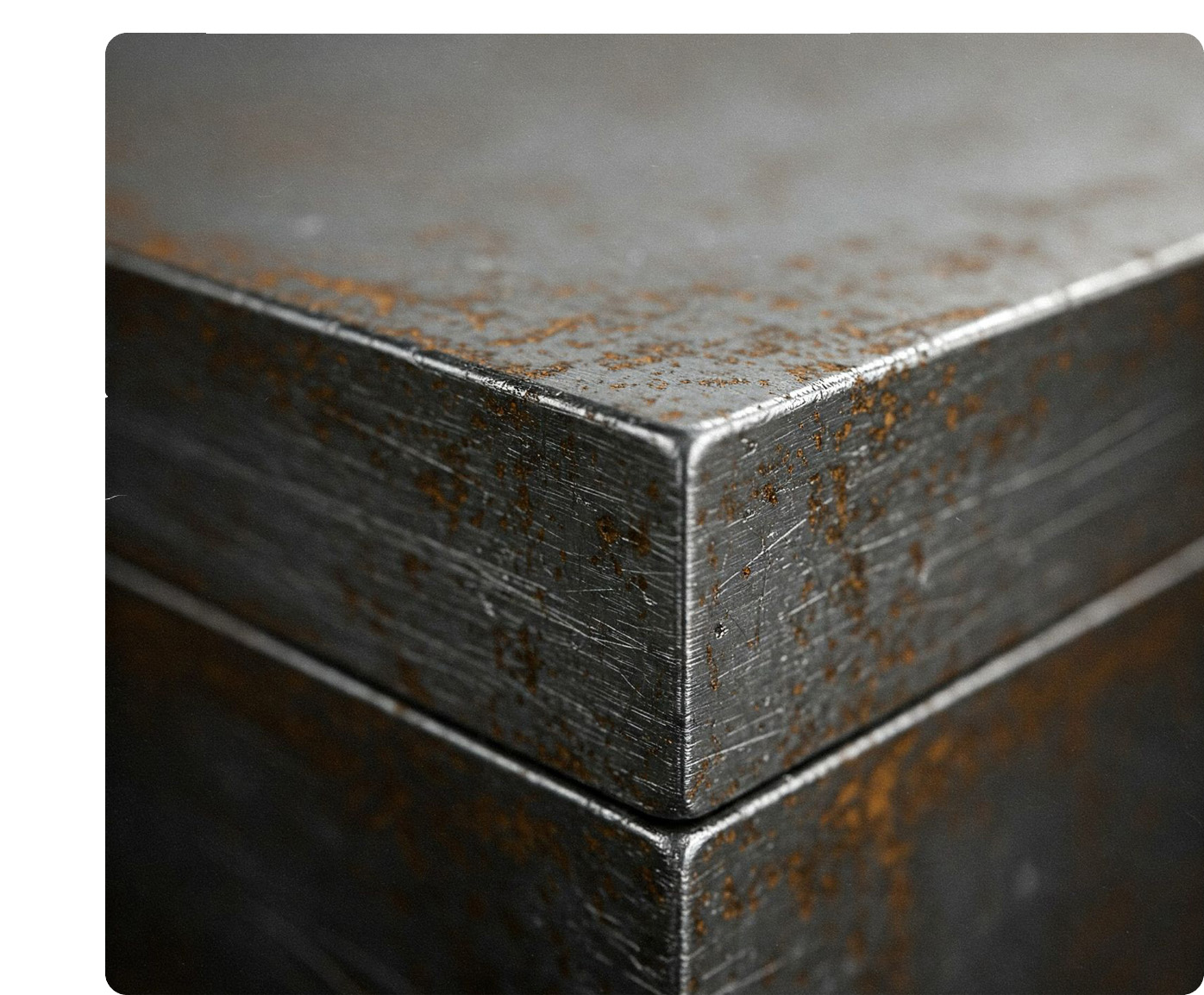
Various applications of steel plates
Steel plates are highly versatile and indispensable in many sectors. Thanks to their strength, durability and workability, steel plates are used for a wide range of applications, from heavy-duty constructions to decorative garden solutions. But what exactly do you use a steel plate for? In this blog, we give you an overview of the most important applications. Whether you work in construction, engineering or landscaping, chances are steel plates play a role in your field as well.
What are steel plates used for?
There are several types of steel plates: hot-rolled, cold-rolled, galvanised and chequer plates. Depending on the type of steel plate, there are many different ways the material is used. The choice for a specific type depends on the desired properties such as strength, corrosion resistance or finish.
Think, for example, of the robustness of hot-rolled steel, the precise finish of cold-rolled plates or the anti-slip profile of a chequer plate. Each type has its own advantages and therefore its own application.
Below, you’ll find a number of common applications of steel plates listed:
Construction and building
The sector in which steel plates are used the most is the construction sector. Here, they are used as the basis for structural components, such as column bases, façade cladding and wall constructions. Thanks to the strength of steel, these plates are perfectly suited for load-bearing elements. They are also easy to weld and combine well with other construction materials.
You’ll also often see steel plates in temporary structures such as scaffolding or formwork systems. They provide stability and can withstand heavy loads.
Vehicle and machinery manufacturing
In vehicle and machinery manufacturing, steel plates are used to produce bodywork, machine frames and parts for equipment. This is where the dimensional accuracy of cold-rolled steel is particularly useful, as well as its formability. These plates can be precisely machined into components with minimal tolerances.
In the agricultural sector, steel plates are also used in the construction of machines and equipment. They are strong enough to handle heavy loads and withstand harsh conditions.
Shipbuilding
In shipbuilding, everything revolves around robustness and resistance to water and weather. Hot-rolled steel plates are widely used here for the hull, deck and other load-bearing parts of ships. Thanks to the large dimensions in which these plates are available, they can be used efficiently for large surfaces.
Corrosion protection also plays an important role. Galvanised steel plates are popular for components that come into contact with salt water.
Cover plates and protective layers
Steel plates are also frequently used as cover plates or protective plates. Think of applications where pipes or cables lie underground and need protection from pressure or damage. A steel plate offers strong coverage and prevents damage.
In industrial environments, steel plates are also used as protective layers to safeguard machines or floors from wear or chemical influences.
Floors and stair treads (chequer plate)
Chequer plates are steel plates with an anti-slip profile. These plates are ideal for applications where safety and grip are important. You’ll find them in industrial floors, platforms, tail lifts and stairs. Thanks to the raised pattern, a chequer plate offers extra grip, even when wet.
In transport vehicles such as trucks or trailers, chequer plates are also used as flooring or steps.
Decorative applications
In addition to technical uses, steel plates are increasingly chosen for decorative purposes. Think of the use of Corten steel in garden decoration. This type of steel develops a rust-coloured patina layer over time, which not only looks characterful but also provides protection against further corrosion.
Corten steel plates are used for planters, garden walls, art objects and boundary fencing. They add an industrial and modern look to outdoor spaces.
Which steel plate suits your application?
The right choice of steel plate depends on your specific application. Do you need a plate that looks good and requires precise machining? Then a cold-rolled steel plate is often the best choice. Is it for heavy-duty constructions where bendability and toughness are important? Then hot-rolled steel is the solution. For applications where corrosion resistance matters, such as outdoors or in humid environments, galvanised steel is the best option. If safety is the priority, for example for stair treads or floors, a chequer plate with an anti-slip profile is the right choice.
At Ballast, we are happy to help you make the right choice. Contact our team for personal advice or browse our extensive range online.
Want to know more about the differences between steel plates? Then read our blog on the various types of steel plates.