



Ballast in construction and infrastructure projects
When people hear the word “ballast”, they often think of ships. Understandable, as ballast is essential for keeping vessels stable on the water. But did you know that ballast also plays an important role outside the maritime world? In construction, infrastructure and industry, it’s just as indispensable, even if you don’t always notice it directly.
In this blog, we take you through the lesser-known applications of ballast. From temporary structures to heavy bridge components, ballast quite literally keeps everything in place.
Where else is ballast used?
Ballast is used in many more sectors than just shipping. Think of construction projects, industrial installations and infrastructure works. It’s not only supplied to ships, but also to cranes, lifts and concrete structures.
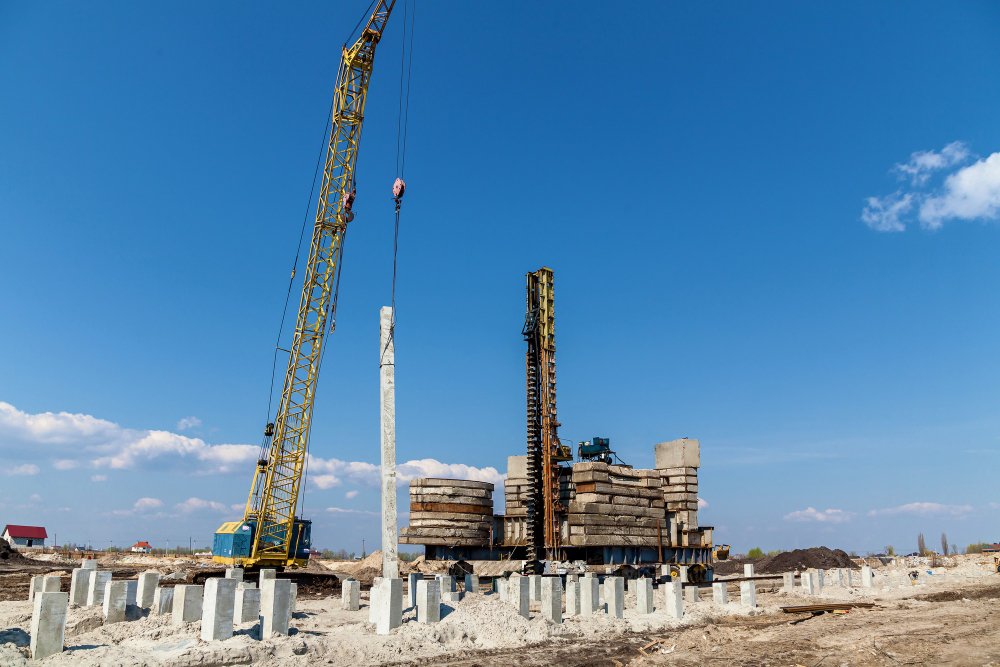
The materials are delivered to a wide range of industries. Ballast is used to stabilise cranes, serve as counterweights in lifts, or temporarily add weight to concrete elements during pouring or assembly. Even for bridge sections or roadway elements, ballast is used to keep components securely in position.
Temporary or permanent ballast
In construction and infrastructure, ballast often has a dual role: temporary and permanent. It is used during assembly to keep a temporary structure stable. This can be important in strong winds, unstable ground conditions or during complex lifting operations.
There are also applications where ballast becomes a permanent part of the structure. Think of counterweights in lifts or foundations where the added weight ensures long-term balance.
Ballast ensures stability and safety
The primary function of ballast in construction is adding mass for stability. Whether it’s keeping a prefabricated bridge section in position or preventing a crane from becoming unbalanced under load, mass is essential.
Especially in construction and infrastructure, where safety and precision go hand in hand, a reliable ballast plan is crucial. The weight must be correct, applied in the right place and suited to the project conditions.
Custom ballast solutions
Although the word “ballast” may sound simple, its application rarely is. Every project has different requirements. The required weight, the form of the material, the available space and the ground conditions together determine what is needed. Customisation is therefore the standard.
Ballast is tailored to its purpose: stabilising, adding weight, providing temporary support or ensuring permanent balance. This means each request is assessed anew to find the best solution.
Ballast plays a silent leading role in construction
Ballast is much more than a maritime tool. In construction and infrastructure, it provides daily stability, safety and continuity. Whether used temporarily or as a permanent part of a structure, its role is always functional and essential.
The next time you cross a bridge, walk past a crane or step into a lift, remember: there’s a good chance ballast is involved.
Curious what ballast can do for your construction project? Contact us and we’ll be happy to help you find the right solution.